
Tag: coffee bag labels

  • How Coffee Brands Can Improve Their Packaging
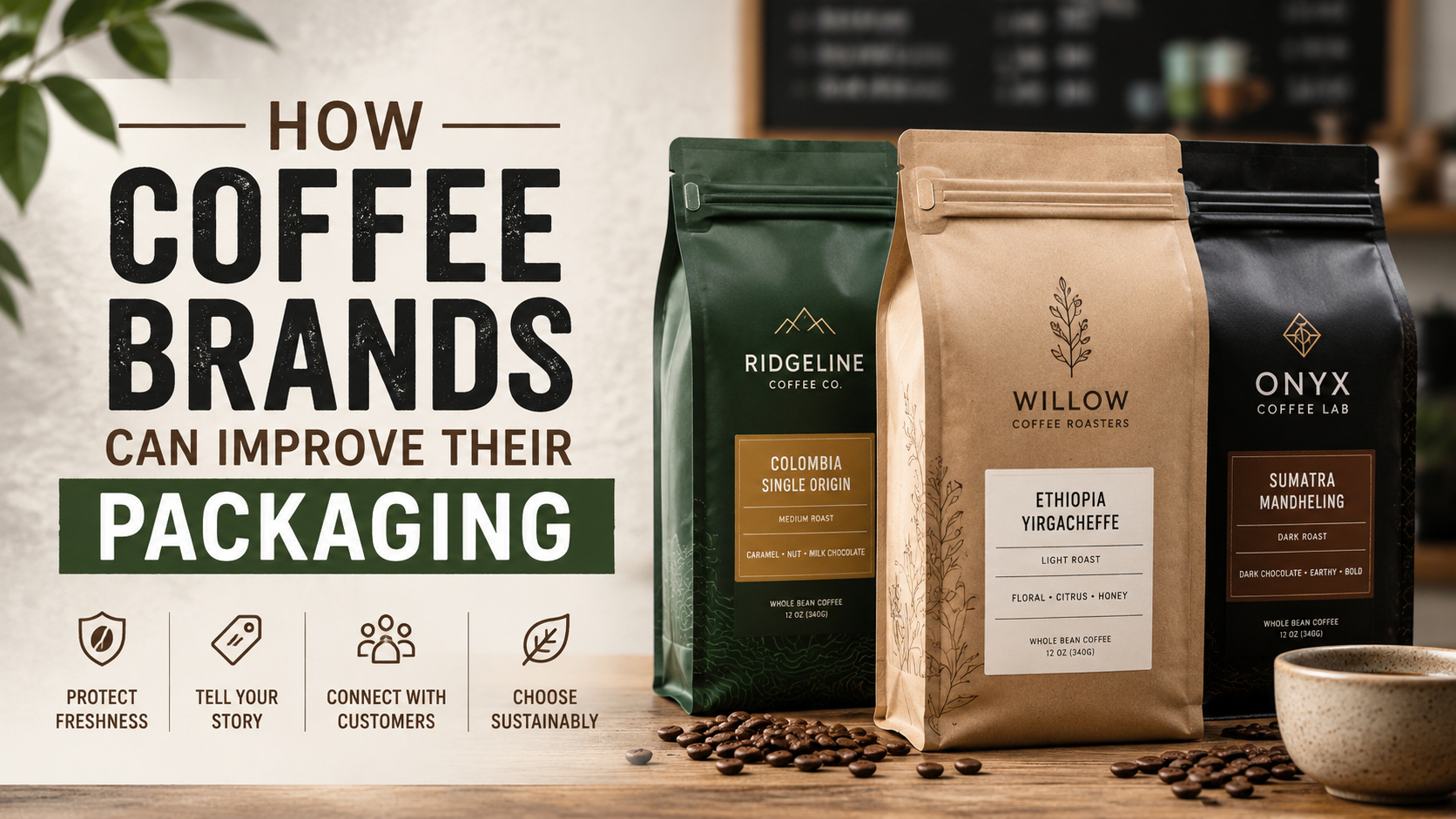
    How Coffee Brands Can Improve Their Packaging

    TLDR

    Coffee packaging has three main jobs: protect freshness, explain the product, and make the brand easy to recognize.

    Coffee brands can improve their packaging by using high-barrier bags, clear product information, consistent visual systems, resealable closures, and flexible packaging labels. Sustainable claims should also be specific and supported, rather than relying on vague terms such as “green” or “eco-friendly.”

    Good packaging does not need to be elaborate. It needs to help customers understand what they are buying and keep the coffee in good condition after they bring it home.

    A coffee bag has to do quite a bit of work.

    It protects a product that is sensitive to oxygen, moisture, heat, and time. It also needs to communicate roast level, origin, flavor, weight, brewing recommendations, and brand personality, often within a few inches of printable space.

    That is why coffee brands can improve their packaging without completely redesigning it. A clearer label, a more useful closure, or a better system for identifying different roasts can make the product easier to buy and easier to use.

    The goal is not to squeeze every possible detail onto the front of the bag. The goal is to make the right information easy to find.

    Start With Freshness, Not Decoration

    Packaging design matters, but it cannot compensate for a bag that does not protect the coffee.

    Roasted coffee is vulnerable to oxygen and moisture. Research summarized by the Specialty Coffee Association identifies oxygen as one of the main factors affecting roasted coffee freshness. Reducing the amount of oxygen inside coffee packaging can significantly slow quality loss.

    For most whole-bean and ground coffee products, brands should consider several functional features:

    • High-barrier packaging that limits exposure to oxygen and moisture
    • A reliable heat seal
    • A resealable zipper for use after opening
    • An opaque or light-blocking material
    • A one-way degassing valve for freshly roasted coffee

    Freshly roasted beans continue to release carbon dioxide after roasting. A one-way valve allows that gas to leave the bag while helping prevent oxygen and moisture from entering. It also reduces the chance of the package swelling while the coffee is being stored or shipped.

    Not every coffee product uses the same packaging system. Coffee that has already degassed, instant coffee, pods, ready-to-drink products, and small sample packs may have different requirements. But the starting point should always be the same: choose the package structure based on the product, not simply on how the bag looks in a mockup.

    Make the Front of the Package Easier to Scan

    A customer should not have to rotate the bag three times to figure out what kind of coffee it contains.

    The front panel should establish a clear information hierarchy. In most cases, that means showing:

    1. The coffee brand
    2. The product or roast name
    3. The roast level
    4. The coffee format, such as whole bean or ground
    5. The net weight

    Origin, tasting notes, processing method, and elevation can be useful, but they should not compete with the basic product information.

    For example, this is difficult to scan:

    SUNRISE
    ETHIOPIA
    NATURAL
    BLUEBERRY
    LIGHT
    GUJI
    1,950 MASL
    HEIRLOOM
    ROASTED WITH CARE

    A clearer version might be:

    Sunrise Coffee
    Ethiopia Guji
    Light Roast
    Blueberry, Peach and Cocoa
    Whole Bean | 12 oz

    The second version still communicates the character of the coffee. It simply gives each piece of information a clear job.

    Coffee brands selling packaged products in the United States should also review applicable FDA labeling requirements. The principal display panel generally needs to include the product’s statement of identity and net quantity. Other required information may need to appear on the information panel, depending on the product and business.

    Design should support required information rather than crowding it with illustrations, tasting wheels, badges, and marketing copy.

    Create a Consistent System for Every Coffee

    A strong coffee packaging system makes individual products look different without making them feel unrelated.

    This is especially important for roasters offering several origins, blends, roast levels, or seasonal releases. Customers should be able to recognize the brand first and identify the specific coffee second.

    One practical approach is to divide the design into fixed and variable elements.

    Fixed Elements

    These remain consistent across the product line:

    • Logo placement
    • Primary typefaces
    • Label shape
    • General layout
    • Bag material
    • Brand colors
    • Required product information
    • Website and contact details

    Variable Elements

    These change between products:

    • Accent color
    • Product name
    • Origin
    • Roast level
    • Tasting notes
    • Illustration
    • Batch number
    • Roast date

    A roaster might use yellow for light roasts, red for medium roasts, and dark blue for dark roasts. Another might assign colors by origin or processing method.

    The exact system matters less than consistency. Customers should not have to relearn the packaging every time they purchase a different coffee.

    Use Labels to Add Flexibility

    Fully printed coffee bags can look polished, but they are not always the best fit for smaller roasters or brands with frequently changing products.

    Custom labels allow a coffee company to use a standard bag while changing the product information for each roast, origin, or seasonal release. This can reduce the need to order a large quantity of preprinted bags for a coffee that may only be available for a few months.

    For example, a brand could use one matte black bag across its entire product line and apply a different label to each coffee. The bag provides consistency, while the label handles the variable information.

    Coffee brands can use custom packaging and label stickers for:

    • Front branding labels
    • Roast identification
    • Limited releases
    • Sample bags
    • Subscription shipments
    • Packaging seals
    • QR codes
    • Batch numbers
    • Roast dates
    • Thank-you stickers inside shipping boxes

    Labels should be applied to the outside of the package, not directly to unpackaged food unless the material is specifically intended and approved for that use.

    The label material should also match the package. A heavily textured paper label may not adhere well to every flexible bag. Glossy surfaces, cold storage, oil, dust, and repeated handling can also affect adhesion.

    Order a small test batch before committing to a full run. Apply the labels to the actual bags, fill them, seal them, stack them, and ship a few. Packaging has a habit of revealing problems shortly after the expensive order is placed.

    Explain What Makes the Coffee Different

    Coffee packaging should answer the questions a customer is likely to have at the shelf or product page.

    Useful details may include:

    • Country and region
    • Farm, cooperative, or producer
    • Coffee variety
    • Processing method
    • Roast level
    • Tasting notes
    • Recommended brewing methods
    • Roast date
    • Best-use guidance
    • Whole bean or ground
    • Caffeine or decaffeination information

    This does not mean every detail belongs on the front.

    The front panel should help the customer identify the product. The side or back can provide the story, brewing instructions, sourcing details, and more technical information.

    A QR code can also extend the packaging without making it crowded. It might lead to:

    • Brewing instructions
    • Producer information
    • A video from the roastery
    • Subscription options
    • Batch-specific details
    • Coffee traceability information
    • A loyalty or rewards page

    The destination should be useful. A QR code that leads to the general homepage adds friction without adding much value.

    Make Tasting Notes More Helpful

    Tasting notes can make coffee more appealing, but they can also confuse customers when they are presented without context.

    A bag that says “jasmine, lemongrass, nectarine, black tea and panela” may be accurate, but some customers will wonder whether those ingredients were added to the coffee.

    Simple supporting language can help:

    Natural flavor notes found in the brewed coffee. No added flavors.

    Brands can also group tasting notes by character:

    • Bright and fruity: peach, citrus and berry
    • Sweet and balanced: caramel, almond and cocoa
    • Rich and bold: dark chocolate, molasses and toasted nuts

    This makes the package easier to understand for customers who do not regularly attend professional cuppings.

    And it keeps the tasting notes from sounding like someone lost a produce aisle inside the coffee bag.

    Improve the Experience After Opening

    Packaging is still part of the customer experience after the sale.

    An attractive bag becomes frustrating when it cannot be opened cleanly, resealed properly, or stored upright. Small functional details often matter more than an additional foil accent.

    Consider adding:

    • An easy-tear notch
    • A resealable zipper
    • A stable flat bottom
    • A clear opening point
    • Simple storage instructions
    • A printed roast date area
    • Brewing ratios
    • Grind recommendations
    • A short freshness note

    For example:

    Store sealed in a cool, dry place. For the best flavor, grind immediately before brewing.

    Brewing instructions can also be simple:

    Start with 1 gram of coffee for every 16 grams of water, then adjust to taste.

    That gives new customers a useful starting point without turning the back of the package into a brewing textbook.

    Be Specific About Sustainable Coffee Packaging

    Many coffee customers care about packaging waste. But sustainability language should be accurate and easy to understand.

    Terms such as “sustainable,” “earth-friendly,” and “green” are too broad when they are not supported by specific information.

    A better statement explains what the package is made from and what the customer should do with it:

    This pouch is made with 30% post-consumer recycled material.

    Or:

    Remove the valve before placing the clean pouch in participating store-drop recycling programs.

    Or:

    The paper box can be recycled. The inner coffee pouch should be placed in household trash.

    The FTC’s Green Guides advise businesses to qualify environmental claims and avoid implying benefits that cannot be substantiated. For example, a package should not be presented as recyclable without considering whether the necessary recycling programs are reasonably available to customers.

    Coffee bags are often made from several bonded layers because the package needs to protect the product. That can make disposal more complicated. Honest instructions are more useful than a large leaf icon with no explanation.

    Design Packaging for Shipping as Well as Shelves

    Coffee packaging may look good standing alone but still perform poorly once it is packed into a shipping box.

    Before approving the design, consider how the package handles:

    • Pressure from other bags
    • Abrasion during shipping
    • Label scuffing
    • Changes in temperature
    • Moisture exposure
    • Folding and creasing
    • Movement inside the box

    Leave enough room in the shipping box for the package without allowing it to slide around excessively. Use inserts or paper padding when needed, particularly for gift sets, glass containers, or multiple bags packed together.

    The shipping box can also continue the brand experience. A simple logo sticker, printed card, brewing guide, or handwritten note can make the order feel complete without adding much cost.

    Test Packaging With Real Customers

    The design team already knows what every element means. Customers do not.

    Show the package to people who were not involved in creating it. Give them a few seconds to look at the front and ask:

    • What brand is this?
    • What kind of coffee is it?
    • Is it whole bean or ground?
    • What is the roast level?
    • What flavor should you expect?
    • How much coffee is in the bag?
    • What would you look for next?

    Any answer that requires an explanation points to a possible packaging problem.

    It is also worth placing the design next to competing products. A coffee bag can look excellent on a computer screen and disappear completely once it is surrounded by twenty other brown kraft bags.

    Print physical samples whenever possible. Screen colors, metallic effects, small text, fine lines, and matte finishes can look very different in print.

    Coffee Packaging Improvement Checklist

    Before approving a new coffee package, confirm that:

    • The package protects against oxygen, moisture, and light
    • Fresh coffee has an appropriate degassing solution
    • The closure is easy to open and reseal
    • The brand name is easy to identify
    • The product name is clear
    • Roast level is easy to find
    • Whole bean or ground is clearly stated
    • Net weight is visible
    • Required labeling has been reviewed
    • Tasting notes are easy to understand
    • Product variations follow a consistent visual system
    • Roast dates and batch details can be added efficiently
    • Environmental claims are specific and supported
    • Disposal instructions are practical
    • Labels adhere properly to the actual package
    • The package has been tested during shipping
    • The final design has been printed and reviewed at full size

    Conclusion

    Coffee packaging should protect the product first. After that, it should make the coffee easy to identify, understand, store, and brew.

    The most useful improvements are often straightforward: simplify the front panel, create a consistent system across products, improve the closure, add clearer tasting notes, and use flexible labels for changing inventory.

    Coffee brands can improve their packaging without replacing everything at once. Start with the problem customers are most likely to notice, test the solution on real packages, and build from there.

    Good packaging does not need to explain the entire history of coffee. It just needs to help the right customer choose the right bag and enjoy what is inside.